UPLB: Pioneers of Meliponiculture Research
The University of the Philippines Los Baños (UPLB) has become the epicenter of stingless bee research in Southeast Asia. Dr. Cleofas R. Cervancia and Anna Locsin have spent decades analyzing the unique properties of Trigona biroi honey. Their groundbreaking studies revealed its exceptionally low sucrose content (well below 1%) and high levels of antioxidant phenolic compounds, making it ideal for diabetic-friendly products.
"Stingless bee propolis shows stronger antimicrobial activity than European honeybees' - that's nature's pharmacy in our backyard."
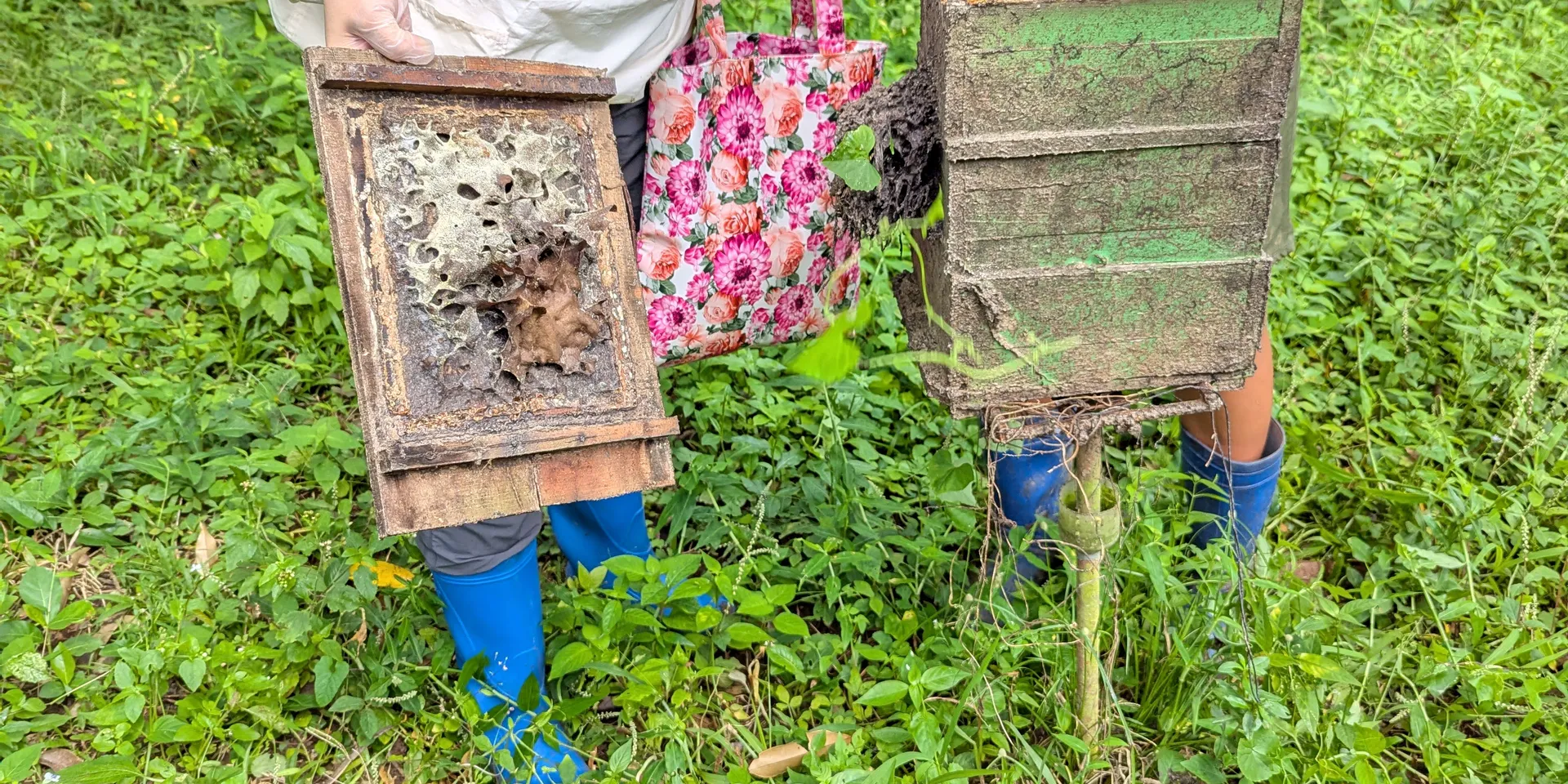
UPLB scientists conducting quality analysis of a stingless bee hives
From Coconut Farm to Bee Sanctuary
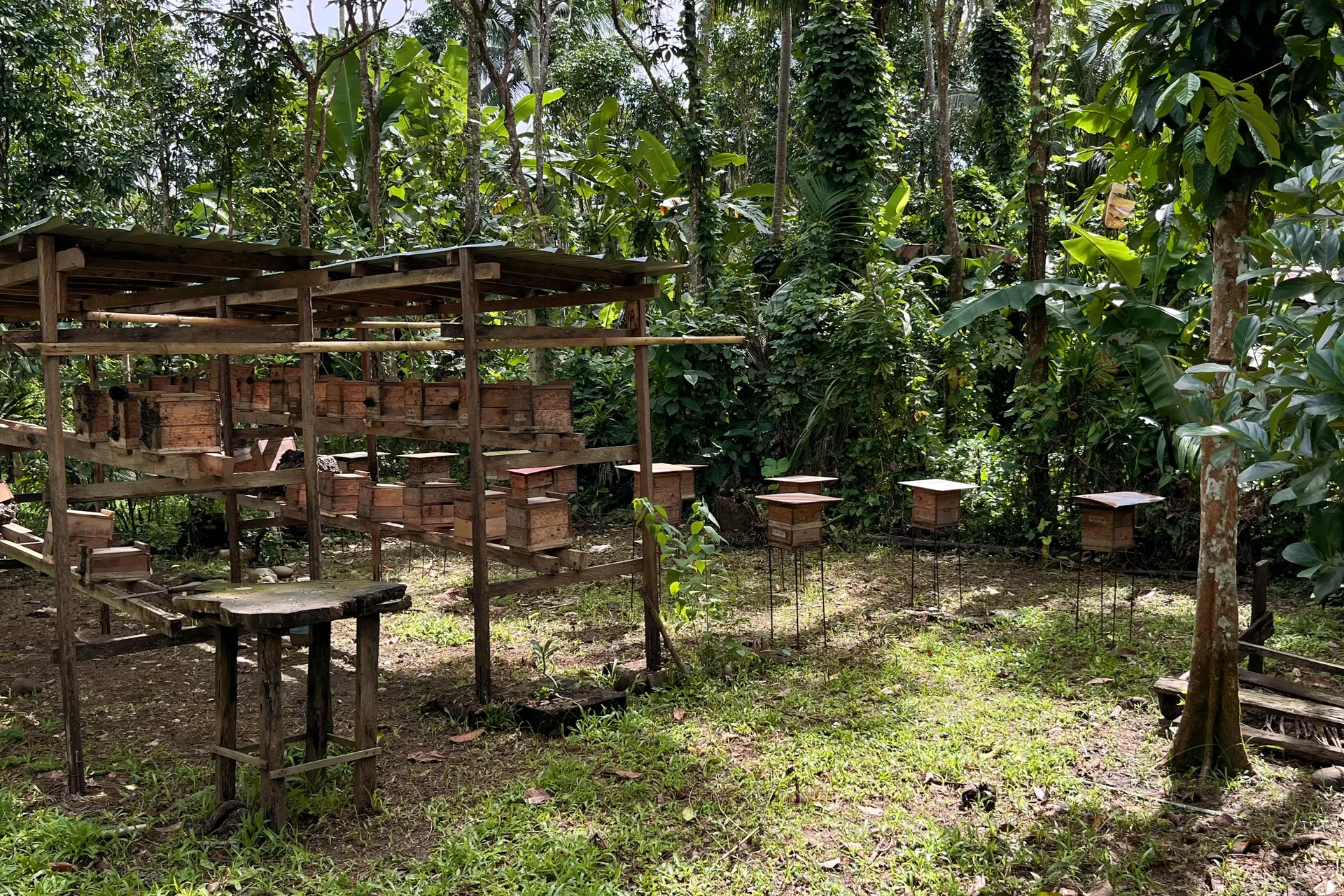
In Nagcarlan, Annie Joy de Roxas transformed her family's coconut farm into a model meliponiculture operation. Starting with 15 colonies in 2017, she now manages over 300 hives suspended between coconut trunks. She sells stingless bee honey and other stingless bee related products while leading the Nagcarlan Stingless Beekeepers Association with over 17 members.
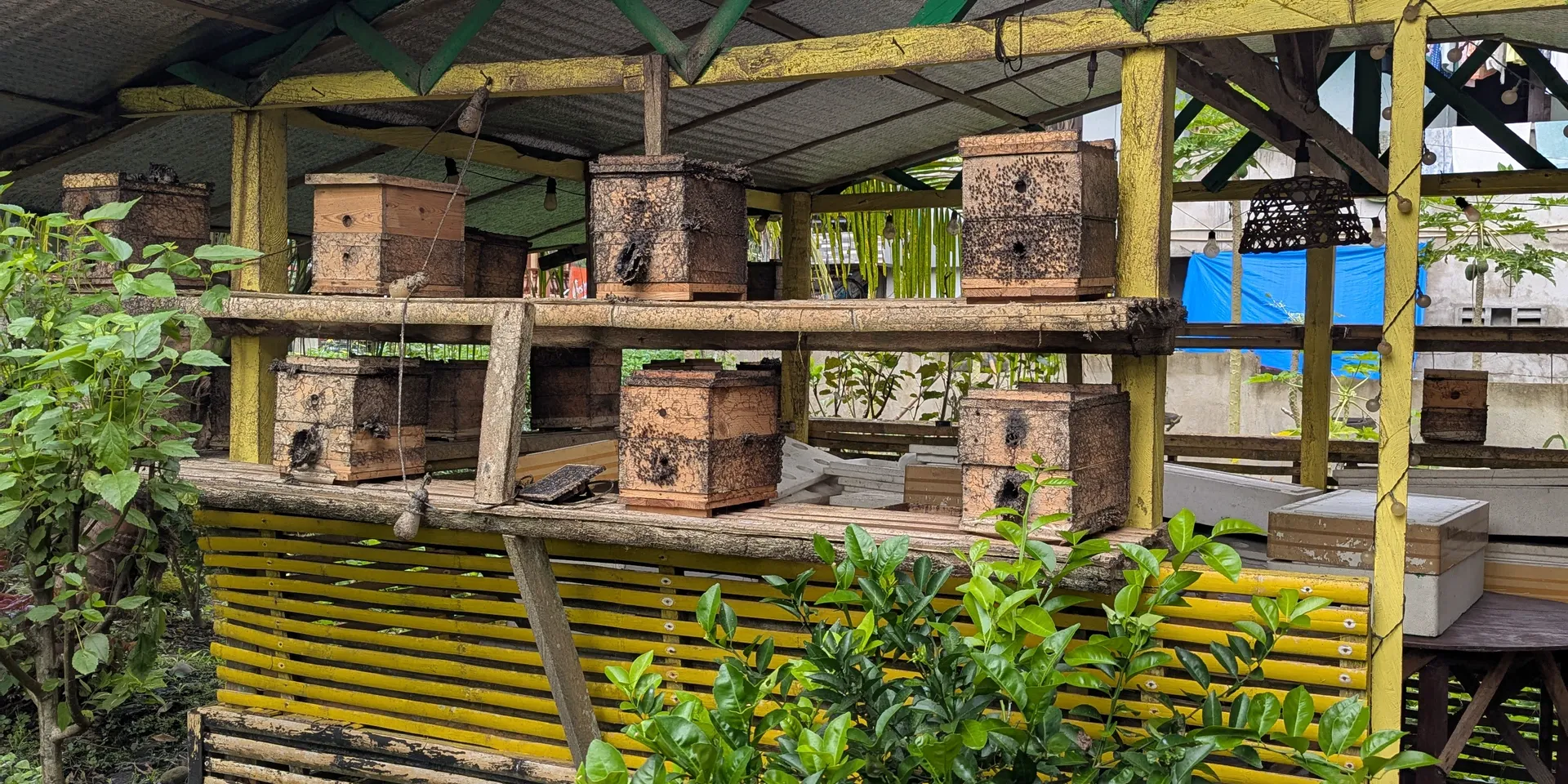
Vertical hive placement maximizes space in integrated agroforestry systems
Lessons from Sayonora Farm's Journey
The ambitious Sayonora Farm in Majayjay serves as both cautionary tale and success story. Initial losses of 400 colonies in 2017 taught owners the hard truth about colony management. After consulting with UPLB experts, they implemented rotational flowering schedules with 47 native plant species and reduced hive density from 15 to 8 colonies per hectare. Their recovery strategy recovered much of their lost colonies leading to much more coconut yield.
"We thought it was just about boxes and bees. Now we understand we're farming an entire ecosystem."
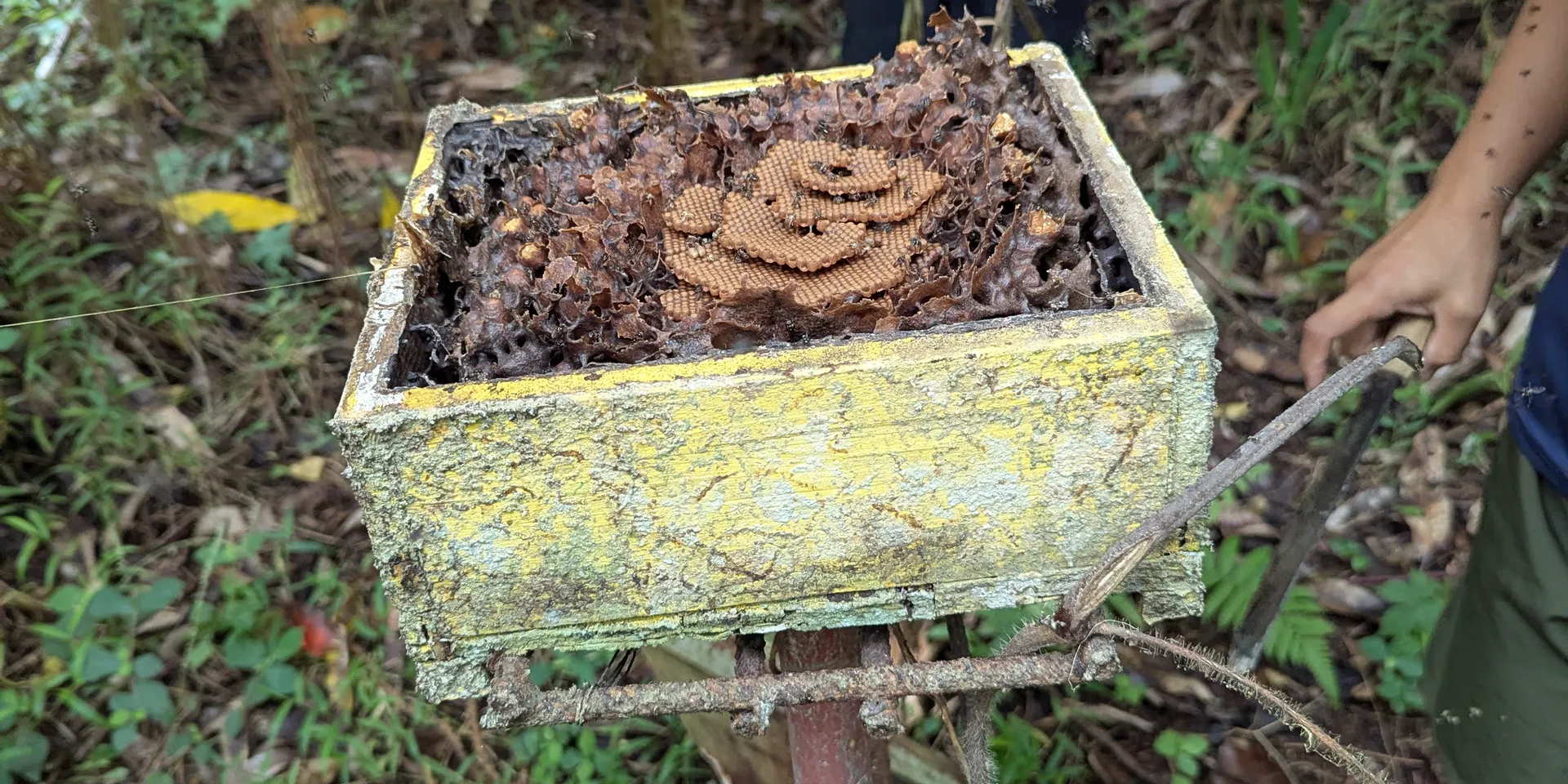
Regenerative planting transformed Sayonora's once-struggling apiary